

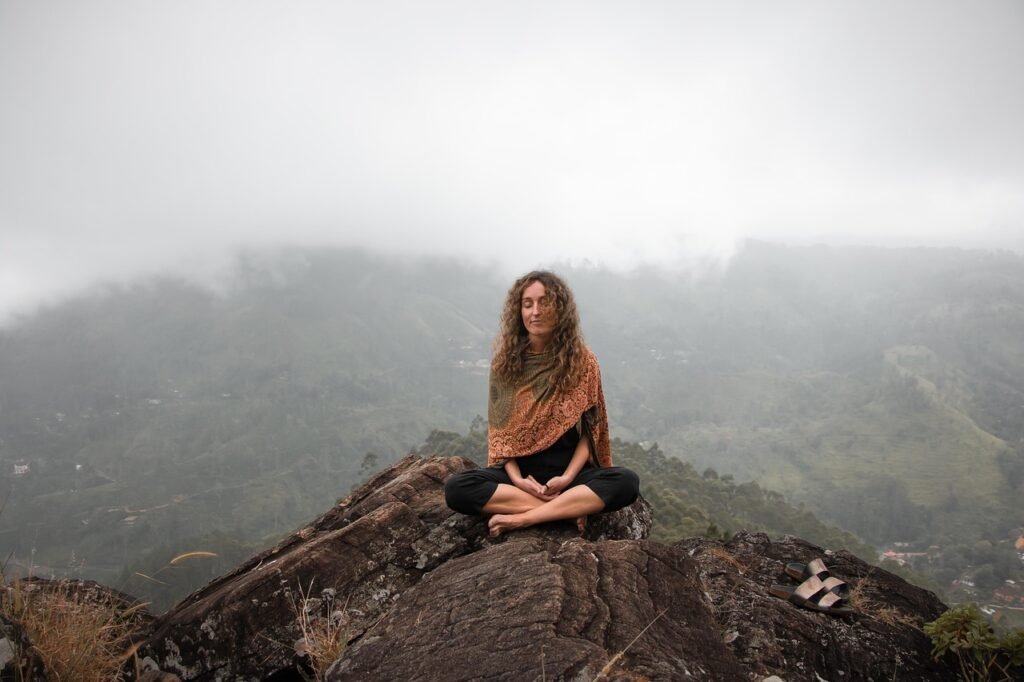
Meditate On The Word
Stress can make your mind feel noisy and scattered, like every thought is talking at once and none of them will quiet down. Your body stays tense, your breathing gets shallow, and being still feels almost impossible. In that kind of state, it’s easy to feel far from God, even when you know He’s near.
Biblical meditation is not about emptying your mind into nothingness. It’s about gently turning your attention toward God’s presence and His truth so your heart, mind, and body can finally begin to settle. It’s a way of saying, “Lord, I’m here. I want to sit with You, not just rush past You.”
God invites you to “be still” and to meditate on His Word—not as a performance, but as a way to receive His peace. Being a doer of the Word here doesn’t mean you just read verses about peace and move on; it means you pause, breathe, and let those words sink into the places that feel overwhelmed. If you believe you are more than a conqueror in Christ, you can also learn a simple, repeatable way to meditate that helps your nervous system calm down and your thoughts return to what is true.
In this chapter, you’ll walk through a gentle three-part practice: calm your body, focus on one simple Scripture or truth, and let it shape your breathing and thoughts for just a few minutes at a time.
Step One: Calm Your Body First
Before you try to focus your mind, it helps to bring your body out of “fight or flight” mode. A stressed body makes it very hard to settle into any kind of meditation. This step is your way of telling your nervous system, “We are safe enough to slow down now.”
Try this simple setup:
- Sit in a comfortable position, feet flat on the floor, hands resting on your lap.
- Gently roll your shoulders back and down.
- Soften your jaw and unclench your hands.
Then, use a short breathing rhythm:
- Inhale through your nose for a count of 4.
- Exhale slowly through your mouth for a count of 6–8.
- As you exhale, picture some of the tension leaving your shoulders, chest, or stomach.
Repeat this for 5–8 breaths.
You can quietly say, “Jesus, I’m here” as you inhale and, “Bring Your peace” as you exhale. This isn’t about doing it perfectly. This is you preparing your whole self—body and mind—to receive, instead of just rush.
Step Two: Choose One Short Scripture or Truth
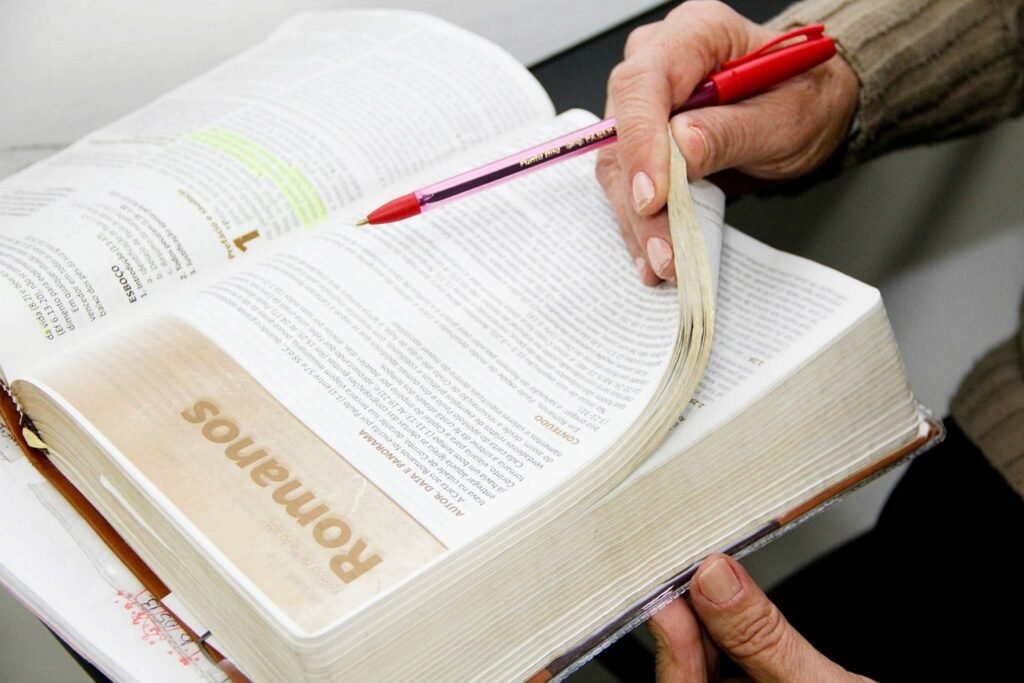
The power of this kind of meditation is in its focus. Instead of letting your mind jump from worry to worry, you gently keep bringing it back to one clear, grounding truth. Short and simple works best.
You might choose something like:
- “At this moment I choose to be in the presence of God.”
- “In God’s presence I have perfect peace.”
- “The Lord is my shepherd, I shall not want for anything.”
- “God’s peace guards my heart and mind.”
Pick one line that speaks to where your stress has been showing up. You’re not trying to fix everything in one sitting. You’re choosing one anchor sentence you will sit with for a few minutes.
Write it down or keep it in front of you. This is your gentle center. When your mind wanders (and it will), this is what you come back to—not as a harsh rule, but as a kind reminder.
Step Three: Breathe the Verse In and Out
Now you’ll connect your breath with the truth you chose. This helps your body and mind receive it together instead of just reading it and moving on.
Try this pattern:
- Inhale gently through your nose for a count of 4, silently saying the first part of your verse or phrase.
- Exhale slowly for a count of 6–8, saying the second part.
- Continue repeating this for 3–5 minutes.
For example:
- Inhale: “In this moment…”
Exhale: “…I choose to be in the presence of God.”
Or:
- Inhale: “In God’s presence…”
Exhale: “…I have perfect peace.”
Your mind will wander—that is completely normal. When it does, don’t scold yourself, don’t decide you’re “bad” at this. Just notice it: “My thoughts drifted,” and gently come back to your breath and your verse. Every return is you practicing trust instead of stress. This is what it looks like to meditate on the Word in real time, not just in theory.
Step Four: Let the Truth Sink into Your Day

Meditation doesn’t end when you get up from your chair. The goal is to carry this centered awareness with you into the rest of your day.
After you finish your 3–5 minutes, take one more slow breath and ask:
“What does this truth mean for how I face today?”
You might notice a small shift, like:
- “I don’t have to rush this next task.”
- “I’m not going into this meeting alone.”
- “I can choose peace instead of rehearsing worst-case scenarios.”
Then, take one small step in that direction—walk into the next task a little slower, pause before answering a message, or place your hand over your heart and repeat your verse once more before you move on. These tiny choices are how meditation moves from a moment into a lifestyle.
Step Five: Create a Short Daily Meditation Rhythm
You don’t need long, complicated sessions to feel the impact. Consistency matters more than length.
You could try a simple rhythm like:
- Morning: 3–5 minutes of verse-based breathing before your day really starts.
- Midday: 2–3 minutes when you notice stress rising.
- Evening: 3 minutes to settle your mind before bed.
You can stick with the same verse all day or choose one anchor verse for the week. Over time, your mind will start reaching for these truths more easily when stress shows up. You are training both your spirit and your nervous system to run toward God’s peace, not just your familiar stress patterns.
A Short Prayer Before You Meditate
You can use this prayer as a starting place:
“Lord, my mind has been busy and my body feels tense. I want to learn how to slow down with You. As I breathe and focus on Your truth, help my thoughts to settle and my spirit to remember that You are near. Teach me to meditate on Your Word in a way that brings real peace to my mind and body. In Jesus’ name, amen.”
As you calm your body, focus on one simple truth, and breathe it in and out, you’re not just “relaxing.” You are practicing what you believe. You are choosing, in a very practical way, to be a doer of the Word—letting God’s peace guard your heart, mind, and spirit even when life feels stressful.
Your Next Gentle Step
If your mind has felt noisy lately and your body has been carrying more tension than you realized, take a breath and give yourself permission to be human. Overwhelmed doesn’t mean ungodly—it means you need care. And caring for your temple is part of praise.
🙏 What If God’s Peace Could Calm Your Body, Mind, and Spirit… Would You Try It?
If you’re ready, my Faith-Based Nervous System Reset Guide will guide you through simple, practical steps to help your body settle, your mind quiet, and your spirit stay anchored.